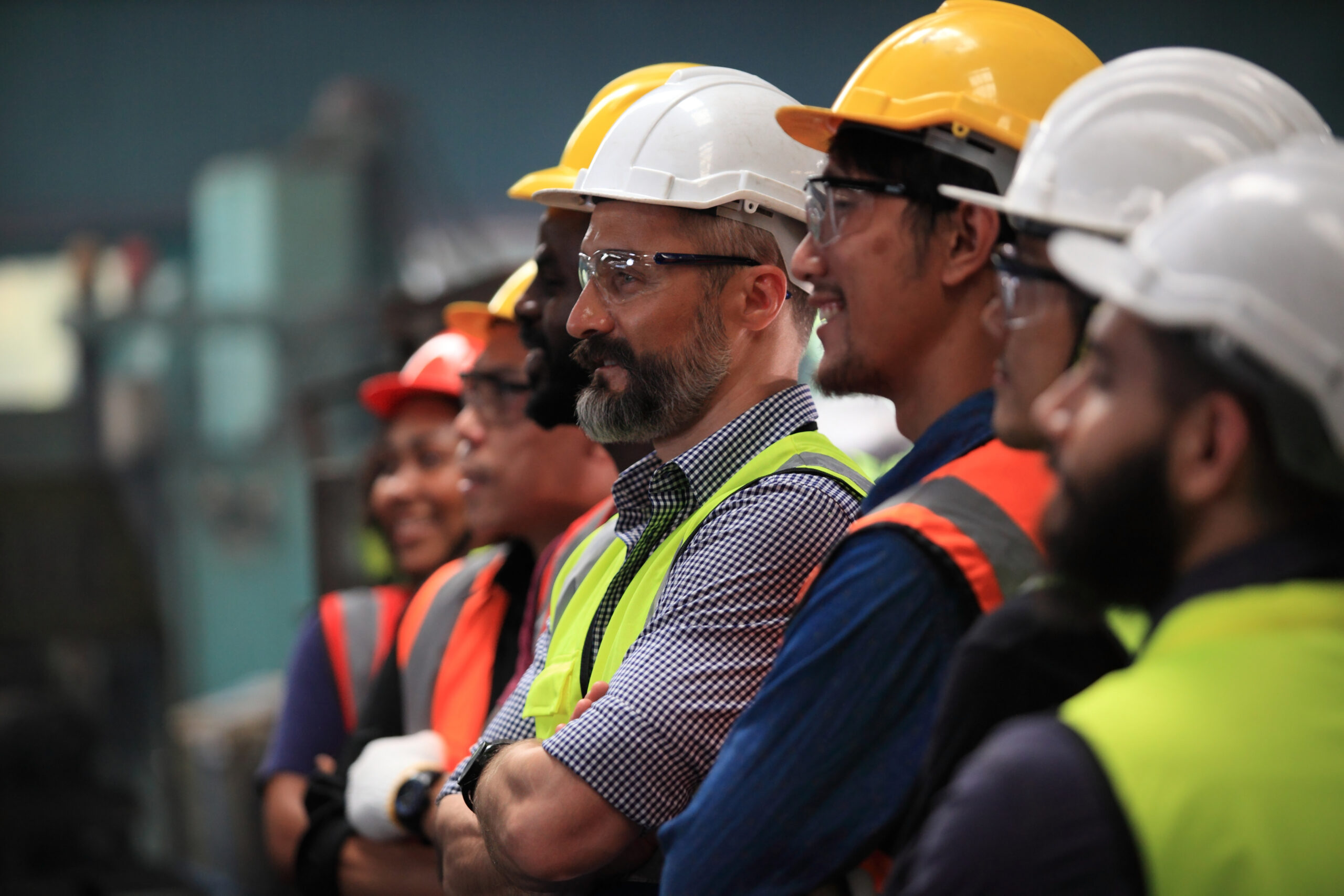
Industrial Automation : The most In-Demand Job Titles in 2026

In 2026 the industrial automation sector continues to experience a remarkable surge, creating a wealth of job opportunities as industries drive for greater efficiency and innovation.
With the market projected to grow from USD 14.65 billion in 2024 to USD 24.16 billion by 2029 an impressive annual growth rate of 10.54%—the demand for skilled professionals is higher than ever.
Key industries such as manufacturing, energy, and pharmaceuticals are making significant investments in their automation systems, emphasizing the crucial roles of system integrators and OEMs. This has created a sustained demand for skilled automation engineers and technicians.
What Roles are In-Demand in Industrial Automation?
The industrial automation sector in the USA covers a broad spectrum of positions and sub domains including.
Research carried out by Automation Jobsearch indicates the following job titles are among the most in-demand by leading employers and recruiters.
- SCADA Engineers
- PLC Programmers
- Control and Instrumentation (C&I) Engineers
- Controls Engineers
- Robotics & Motion Control Engineers
- Instrumentation and Electrical (E&I) Technicians
- Instrumentation and Control (I&C) Technicians
- Industrial Networking Specialists
- DCS Engineers
- ICS Cyber Security
- Sales Engineers
SCADA Engineers

SCADA engineers design, implement, and manage the integration of automation systems used to monitor and control industrial processes across a wide variety of industry sectors, such as manufacturing, energy, and water management.
Engineering roles within the SCADA domain may focus on SCADA product development, SCADA configuration, and SCADA network design.
Key Skills: Knowledge of SCADA platforms (Wonderware, Ignition, etc.), network protocols (Modbus, OPC), database management, HMI (Human-Machine Interface) development, databases management and package integration.
PLC Programmers

PLC Programmers develop and maintain software deployed on specialist industrial computers called programmable logic controllers (PLCs). PLCs are configured with a specialist type of industrial software, which is defined in the standard IEC61131-3, such as FBD, LAD, and SFC.
PLC engineers typically work with major platforms like Siemens, Allen Bradley, and Rockwell Automation using tools like TIA Portal or RSLogix to write logic for automation processes.
In the UK and Europe, Siemens PLCs are the most prolific type of PLC used while Allen Bradley is popular within the USA.
Key Skills: Develop IEC61131-3 application logic and troubleshoot with major PLC models such as Schneider Electric, Siemens, Allen-Bradley, and Mitsubishi.
Control and Instrumentation (C&I) Engineers

In the UK, it is common for organizations to assign the responsibility for both control and instrumentation (C&I) to an individual or department, making the term “C&I” ubiquitous in the industry. C&I Engineers typically participate in the design and commissioning of automation systems, such as SCADA and DCS.
They are fully responsible for all components, including network infrastructure, field instruments, control panels, cabling, and routing.
Additionally, they are involved in testing and developing application logic within PLCs, DCS, or SCADA systems.
Key Skills: Instrumentation design, control system design, process automation, and knowledge of standards like IEC and ISO for instrumentation and safety.
Controls Engineers

Controls Engineers optimize industrial automation systems by fine-tuning control loops and improving control system design based on process dynamics and operating cases.
Their role is to optimize plant performance of key metrics, such as quality, production, safety, and efficiency.
These engineers focus more on process control and optimization rather than software configuration or instrumentation, although, as with other automation roles, there will always be some overlapping skillsets.
Key Skills: Control theory, alarm management, simulation and modelling, and advanced process control (APC).
Robotics & Motion Control Engineers

Robotics engineers design and develop robotic systems used in manufacturing, such as automotive assembly and packaging.
Their responsibilities include programming PLCs and servo controllers for robotic systems that perform complex tasks such as welding, material handling, or assembly.
Key Skills: Robotics programming, motion control, knowledge of industrial robot brands (e.g., ABB, Fanuc, KUKA), and integrating robots into broader automation systems.
Instrumentation and Electrical Technicians (E&I)

E&I Technicians work to support the commissioning and maintenance of the electrical and instrumentation components that are part of a facilities automation system.
They are responsible for installing, testing, and maintaining these components, ensuring they function correctly and integrate with control systems. Additionally they may support other disciplines and by implementing electrical isolations to allow for maintenance work to be carried out safely.
In E&I technicians may also have skills for configuring and commissioning of Power Management Systems (PMS) which are specialized industrial computers for control of switchgear and VSDs.
Key Skills: Drive and Motors, Isolations and lockout, instrumentation, and understanding of safety standards in electrical installations.
Instrumentation and Control Technicians (I&C)

I&C technicians are responsible for instrument and control system maintenance, commissioning, and validating the function of field instrumentation.
They will also be responsible for static and dynamic testing of instruments, packages, and other equipment controlled by automation systems such as PLC or SCADA.
In addition, they may undertake inspection tasks such as ex-inspection and inspection of control system panels.
Key Skills: Calibration, commissioning, Ex inspection, and basic control system knowledge for troubleshooting and communication.
Industrial Network Engineers

Industrial Networking Specialists manage the communication networks that enable automation systems to function, a role that has evolved from the broader C&I function due to increasing network complexity and IT/OT convergence.
They design, install, and maintain networks connecting control systems, PLCs, SCADA systems, and field devices, ensuring reliable data communication for real-time monitoring and control.
Key responsibilities include cyber security, access control, network architecture design, configuring and troubleshooting Layer 2 and Layer 3 devices, and diagnosing issues using tools like Wireshark.
Key Skills: Expertise in industrial communication protocols (Modbus, Ethernet/IP, PROFIBUS), cyber security, switches, routers, and diagnostics.
DCS Engineers

DCS Engineers design, configure, and maintain Distributed Control Systems (DCS) used primarily in the process industries. These systems control large-scale industrial facilities with high I/O counts and complex control strategies, such as chemical plants, refineries, and oil and gas production facilities.
DCS configuration and programming are typically based on IEC 61131-3 languages, although many platforms also incorporate proprietary function blocks and engineering tools. The DCS environment is further characterized by vendor-specific communication protocols and tightly integrated system architectures.
Modern DCS platforms are delivered as integrated ecosystems, combining control, supervision, and data management within a single product suite. These ecosystems commonly include historians, alarm management, batch management, and advanced process control applications that support operational insight and process optimisation.
As a result, DCS engineers require a strong understanding of industrial networking, system segmentation, domain and user management, and database concepts, alongside core process control knowledge.
Key Skills: DCS architecture, process control strategies, system integration, troubleshooting, and proficiency in industrial networks. Expertise in integrating DCS with leading market solutions such as Honeywell Experion/TDC, Emerson DeltaV DCS/SIS, Yokogawa CENTUM DCS/ProSafe, and ABB 800xA is essential.
ICS Cyber Security Engineers

Over the past decade, cybersecurity for Industrial Control Systems (ICS) has evolved from a niche concern into a standalone engineering discipline, driven by the increasing frequency and sophistication of cyber threats targeting industrial automation environments.
ICS Cybersecurity Specialists are responsible for establishing and maintaining a strong security posture across control systems by embedding cybersecurity best practices into industrial network and system design.
Their work typically includes the design and implementation of secure network architectures, incorporating firewalls, demilitarised zones (DMZs), and segmentation aligned with UK and international standards such as ISA-99 / IEC 62443.
Key responsibilities also include coordinating penetration testing, implementing system hardening measures, and managing vulnerability assessment, patching, and access control processes.
Key Skills: Expertise in ICS network security architecture, firewall and DMZ implementation, patch management, access control, and penetration testing.
What Industries are Hiring Industrial Automation Professionals?
The following sectors are actively recruiting industrial automation talent:
- Manufacturing
- Automotive
- Pharmaceuticals
- Food and Beverage
- Energy and Utilities
- Aerospace
Who Are the Key Employers in Industrial Automation?
Major industrial automation companies include:
- Schneider Electric
- Rockwell Automation
- Emerson
- ABB
- Mitsubishi Electric Corporation
- Siemens
- Omron Corporation
- Honeywell
- Yokogawa
- Fanuc
About Automation JobSearch

We provide job listing products to support automation companies and recruiters in their talent acquisition efforts, ensuring they find the right candidates quickly and efficiently.
Our online job board attracts both active job seekers and passive candidates, providing exposure to a focused candidate pool of automation professionals.
Are you looking for a new job in controls? Search 1000s of openings 👇
Automation JobSearch is the largest dedicated job board for industrial automation jobs, aggregated from leading employers and curated by automation professionals.

Employers? Recruiters? Register your openings now 👇
Promote your job openings and company brand to an engaged audience of automation professionals.